He did come, to that simple peasant house in Palestine, sharing sleeping quarters with the precious animals. He was there just down our street, very close, a blazing fire of uncreated light pent up in the womb of a humble poor girl, but where is he now?
He was there with the refugee desperately fleeing bloody persecution, seeking a safe haven in the storm, but where is he now?
He was there, feeding hungry families, healing the blind beggar, weeping over Lazarus's tomb before calling the dead back to life, but where is he now?
He was there, nailed to a cruel cross, giving new life to all who find Him.
Do not look in the cold tomb, He is certainly not there!
Listen, He is knocking on the door of your heart. He is calling each one of us, wanting to come in to be a living presence, to have a loving relationship with each one of us.
Look with the eyes of faith, He is there wanting to come in and live in you.
He is there, just humbly invite Him in, find Christ this Christmas.
Monday, 10 December 2018

Wednesday, 28 November 2018
The coming of the lamb of God who takes away the sins of the world.
What
can I give Him, poor as I am?
If
I were a shepherd, I would bring a lamb;
If
I were a wise man, I would do my part;
Yet
what can I give Him?
Give
Him my heart.
Christina Georgina Rossetti

One of my lasting images from a childhood on a
farm was coming down stairs one morning to a wet and cold lamb being revived in
the warming oven of our old Rayburn stove, with a pervading smell of wet wool
filling the kitchen. Another early image was being pushed into the garden in my
pram where a very large white sow would snuffle curiously around the pram
wheels. We may not have shared our kitchen with the cows but we did share their
flies! Even today in Rwanda the house and stable are often shared. So it is
important to understand the Christmas story in its historical and cultural
context, very ably done HERE. Jesus was born into
the home of a poor but very hospitable family in Bethlehem, because the upper
room (Greek: kataluma usually translated inn.) was crammed with guests already, they were squeezed in with the family
into the communal living accommodation downstairs.

As John says in his gospel, “the word became flesh and dwelt amongst us”.
Remember this Christmas that Jesus came into the very midst of us, if you
invite Him in, he is there, right in the middle with your family and friends
sharing the feast, sharing in all the joys and all the sorrows.

The shekinah glory had not been seen, since Ezekiel
had seen it depart from the East gate of the Jerusalem temple, before its destruction
in 586 AD. Revealed not to the priests in Herod’s temple but to humble,
despised shepherds in the Bethlehem hills, who were treated to the most
beautiful and terrifying revelation of the glory of God that has been seen.

Calmed
by the angel’s message they would have rushed down the hill into town to find
the Saviour King, born in humble helplessness into a family home just like the
ones in which they lived.
They may have mused here was someone like one of
them; could He be the servant shepherd, the one who would feed his flock like a
shepherd; and would gather the lambs in his arms,
and carry them in his bosom, and gently lead the mother sheep; as Isaiah had prophesied in the fortieth chapter of his writings. Would He be the one prophesied in Jeremiah who would gather His flock still scattered in exile?
and carry them in his bosom, and gently lead the mother sheep; as Isaiah had prophesied in the fortieth chapter of his writings. Would He be the one prophesied in Jeremiah who would gather His flock still scattered in exile?

Jesus, however, was more than this, He was the
Good Shepherd who laid down His life for the sheep, as He declared in JOHN
10:11-18 .
One of the little rituals I did as a child was
to sneak quietly into the cow shed on Christmas eve to look at the cows who it
was rumoured still knelt to the baby Jesus. Let us remember the living Jesus
and invite Him again into the very centre of our lives.

Monday, 26 November 2018
Abraham
“Go
from your country and your kindred and your father’s house to the land that I
will show you.”

Like Abraham we are all called to be pilgrims through life. It
is up to us if we respond to the call; are we willing to go through separation
and hardship to pursue a distant goal and achieve a prize?
This week I went to a book signing for a book, “ Walking to
Jerusalem ” by Justin Butcher. Last year we had the hundredth anniversary of
the Balfour declaration. A source of joy to the Jewish nation who were seeking
a homeland, but sadness to the Palestinians who were largely displaced ending
up in refugee camps. This was a pilgrimage and penance for all the injustices
which have occurred since. The all way walkers had to commit to taking a 9 month
slot out of their life and suffering all the blisters and hardships along the
way.

My wife, Mary and I took part in two segments, it was a very
moving experience, as we entered into a deep fellowship with our fellow walkers
along the way. Walking through the battle fields of Northern France where so
many lives had been pointlessly lost. Later we set off from Thessalonica walking
the same roman road on which St Paul had walked , as he answered the call of
the man from Macedonia to make his own journey to bring the good news about
Jesus to the people of Europe. We were certainly walking in the footsteps of
giants.
However back to Abraham, he obeyed the call. The original
call had been from Ur where he set out with his father, Terah, however they
only got as far as Haran where Terah died. God renewed His call to Abraham who
obeyed and received the wonderful promise that all the families on earth would
be blessed through him and his descendants would be as many as the stars in the sky. This was the wonderful promise that directly, through
his descendants, would come Jesus, born to redeem and save all nations
worldwide.

So God appeared to Abram, as he was then called, when he arrived
in the land which God had promised him and made a solemn covenant with him but after many years of trying still
no son and heir he must slowly have come to the realisation there was no way
the elderly Sarai was going to bear him a son, so they decided to take matters
into their own hands by Abram sleeping with his wife’s slave girl. This only
caused more problems as his son by this liaison was not the one God had
promised. Finally, one day, he received three
mysterious visitors, thought by some to be the three persons of the Godhead. God once more renewed His promise and they
were given the son through whom, all the amazing promises would come to pass.

Abraham had slowly
learned to patiently trust God, but this famous person of faith was going to be
tested one more time, the request to sacrifice the very one who was so precious
to him. He reluctantly obeyed and must have walked with heavy heart up the
mountain, but at the last moment, as his hand was raised with the knife, a voice
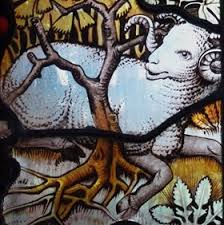
stopped him and as he prophesied, God did "provide a lamb" for the sacrifice, prefiguring
the Father’s own precious son, Jesus, who took our place and died that we might
live forever.
Wednesday, 21 November 2018
Exile
Is there no balm in Gilead?
Is there no physician there?
Is there no physician there?
O that my head were a spring of water,
and my eyes a fountain of tears,
so that I might weep day and night
for the slain of my poor people!
and my eyes a fountain of tears,
so that I might weep day and night
for the slain of my poor people!

On a first visit to Rwanda tears
are never that far away, in a country where 10 million people were massacred in
a hundred days, as you visit schools turned into open mausoleums, where bodies
of school children are preserved in lime and laid to rest on the benches where
they were slaughtered. My saddest moment came in a vision of extreme beauty
looking down on three countries: Rwanda, Burundi and DR Congo, over a vast
green forest where you could imagine somewhere hidden from human view the very
lost Eden of God The very garden of delight where God first walked with Adam
and Eve, now barred from view by fiery Cherubs. Now is only left the slaughter
of Abel repeated by so many people, many times, over the years and still
ongoing in Congo, although Rwanda is experiencing something of a return to joy
as we visit happy churches with young people joyfully singing and dancing in
worship to God. Deep in the heart of all of human-kind is a deep longing to go
back to Eden.

Jeremiah is a book of deep
emotion, it is difficult to separate the words of Jeremiah from the words of
Father God as they are so empathic and in tune. As Jeremiah weeps so does God
in heaven, at His wayward children who were given so much, but always turned
their backs on His infinite kindness to pursue other Gods and puff up their own
pride. Despite sending prophet after prophet to bring them back, they always
rebelled. The threat of exile was always present as they refused to return to
worship only the one true God, many times God relented and sent them yet another
chance, a powerful prophet or a king with a reforming heart turned towards Him.
Eventually God was forced to act decisively and send His people into 70 years
of exile. Withdrawing His shekinah glory from the temple which was then utterly
destroyed by the Babylonians along with the rest of the Holy city. His people
were deported to Babylon where they sat down and wept besides the waters of a
foreign land.

Exile was not only a
punishment, it was the tool of a loving God to turn his people back to him.
With all the props of religion gone, and pride crushed there was room for a new
love affair with the living God. Such was the fiery passion of the three young
men, Shadrach, Meshach, and Abednego, whose flaming love was not crushed
by the fiery furnace, but rather a meeting place for an intimate encounter with
their saviour in the midst of the flames.

We eventually have a return
under Zerubbabel son
of Shealtiel; however, the temple was never rebuilt to its former glory and
occupiers never left the land so in the time of Jesus the Jews were still
pining for a Messiah to drive out the romans and accomplish a true return.
However, Jesus was a very different kind of Messiah. He did bring his people
back into a relationship with the three persons of the Trinity if they believed
and trusted in Him, and eventually all His redeemed church, will be joined
together and welcomed as a bride into the new heavens and the new earth to
dwell united with the triune God.

Monday, 19 November 2018
Giving the law at Mount Sinai
Then he isn’t safe?”
said Lucy.
“Safe?” said Mr
Beaver; “don’t you hear what Mrs Beaver tells you? Who said anything about
safe? ‘Course he isn’t safe. But he’s good. He’s the King, I tell you.” CS
Lewis.
Mount Sinai must have been a very scary place as Moses left
the children of Israel at the base of the mountain and slowly walked up into
the mountain of noise and fire. Mountains are very awe inspiring, and anyone
with any clue about them will tell you that they are places where you can very
quickly die, as you become lost as the winds and rain increase and the mists
come down. They are also places where we can encounter jaw dropping beauty and
have life changing, near mystical experiences.
How much more where
the Holiness of the creator God was manifest in all the noise and light like
that in the centre of an erupting volcano.

However, Moses knew God; he had
already encountered Him in the burning bush where he had discovered that God’s flames
are not always consuming and that He was a God with a personal name “I am”. He
had seen the terrible plagues inflicted on the hardened hearted Pharaoh and his
people and cowered under the protection of a house daubed in sacrificial blood,
as the angel of death passed over. He had experienced walking to freedom
through the dry bed of the Red sea with towering mountains of water on either
side pent up to engulf the pursuing Egyptians. So here he was now slowly
walking into a maelstrom safe in the knowledge that” I am” had ordered him up
into His special protection to meet in person the Living God.
So, what was the Torah? Just a set of simple rules to get to
heaven? No way.
If anything, it was the start of a personal relationship,
answering the age-old question: "how does a weak and sinful human being, approach a Holy
and powerful God?"

The answer lies in the first commandment You shall love the Lord your
God with all your heart, and with all your soul, and with all your might. Love
is from the Hebrew root “aheb”, used many times in the Song of Songs as the
intense passionate love of two lovers in the first flush of desire.
The Torah was the whole set of commands that set up the
rules and regulations where God would dwell with His people; first hovering over the mercy seat
of the ark of the covenant in the Holy of Holies where a trembling high priest
offered a sacrifice for the sins of the people, and eventually in the Jerusalem
temple. However, this whole system did not really change people’s hearts, and
we witness few people in the old testament with this close-up and personal
relationship with God, people like David in Psalm 32:1 You, God, are my God, earnestly I seek you; I
thirst for you, my
whole being longs for you, in a dry and parched
land where there is no water. Also, some of the prophets like Isaiah, who
met with God between two fiery seraphs in the temple.
The demand for holiness only increases with the coming of
Jesus. As he stands on the mount delivering His sermon, any wriggle-room we
might have imagined in the words of the commandments from Sinai are squashed by
Jesus. “be perfect, therefore, as your
heavenly Father is perfect. Matt 5:48.

Jesus was the only person living who actually fulfilled the
demands of Torah, Jesus was the only perfect Lamb capable of taking not
just the guilt of our sin away, but also its power, and only Jesus is the way into
the wide-open arms of our loving heavenly Father.
Thursday, 15 November 2018
Advent at Trinity
The
darkest and the coldest time
Is also
the best time
…….
At the
departing times
The
coldest times
of our
lives;
At the times of excitement
and the
times of expectance.
At the
times of intersection
when hard
choices
have to
be made.
Be with
us
Prince of
peace.
Kate
Mcllhagga
We are
now coming to the time of year, when the light disappears from our land. The
bright sunlight of summer has been subsumed into the glorious colours of a riotous
feast of autumn colour.
Slowly
now the leaves are falling from the trees bowled down the streets by strong
gusts of equinoxal gales, and as the leaves fall bare branches are exposed and
all the colours slowly fade into a uniform grey. Life withdraws into the earth
and the very pulse of life slows down.
As a special
holy gift for this time of year we are given the fast of advent.
Sadly,
this gift has been lost in this culture, as an all intrusive commercialism seeks
to extend Christmas ever earlier into a feast and frenzy of consumer
spending.


Advent is
a time of quietly awaiting the coming of Christ, it is a time of withdrawing
our energy from the mad treadmill of busy life and to make room in the darkness
to prepare our hearts and minds for the coming king. A time to attune our
bodies to the slowing rhythms of the natural world around us, A time to say no
to our bodies and yes to the coming Christ. A time to stand on tiptoe eagerly
awaiting the time when not only our bodies but the whole of creation will be
redeemed and made new.
We wait
for a God who does not stay aloof of His creation but enters in to all the mess
and chaos we have made of His beautiful world. He enters this world as a weak
and vulnerable baby to redeem it, and at His perfect time He will enter as
conquering Lamb to overcome everything which spoils our world to remake heaven
and earth as the perfect dwelling place where He rules in the midst of His
people.
Most of all
Christ wants a personal advent into the hearts and lives of each of His
children, Christ breaks through to shine His light into our personal darkness
to make His dwelling in the very centre of our lives.
If you
want to join with others in an Advent fast, then some of us from the 10 o’clock
congregation will be joining in a simple meal of bread and cheese, after the
service. Advent is a time of special rhythms of prayer so join us in St John’s
at 8 am on a Friday as we spend an hour simply listening to what God is saying
to us, or read through one of the many excellent Advent mediations which are
readily available.
Try out the quiet simplicity of the 8 o’clock congregation and join in that ancient advent prayer:

Tuesday, 2 October 2018
Æthelberht, Bertha and Augustine of Canterbury
Last week we finished a 7 day Pilgrimage to Canterbury. We thought we had finished when we arrived at the Cathedral for evensong; but we had a little surprise in store for us the next day.
We decided to visit the little church dedicated to St Martin on a little hill just outside the city walls.
What we discovered was the oldest Christian church in the English speaking world with a fascinating history.


We decided to visit the little church dedicated to St Martin on a little hill just outside the city walls.
What we discovered was the oldest Christian church in the English speaking world with a fascinating history.

Mary outside St Martins church

We had previously visited the underground Roman museum in the town where we saw some the Chi Ro symbol on some of the artifacts
Being a Christian was not a safe thing to advertise as the images are tiny or hidden underneath a cup or in a mosaic.
Certainly there was an active Christian community in Britain by the Diocletian persecution when brave Christians were martyred for example St Alban in about 305AD. Christianity persisted and there were three British bishops present at the council of Arles 314 AD; conditions having improved a year earlier by the Edict of Milan issued by Constantine the Great, which gave religious tolerance to Christians
However things went from bad to worse for British Christians with the retreat of the Romans from Britain and the invasion of the barbarian Saxons, Angles and Jutes about 409 AD.
So Britain was divided up into smaller kingdoms ruled over by rival kings, including King AEthelbert of Kent.

Æthelberht
In Kent there were strong trading links with the powerful Franks in continental Europe, making a strong friend in the powerful Franks helped him gain dominance over other local kings so he could become bretwalda over them.
So he married Bertha, princess of the Franks, daughter of Charibert King of Franks, the marriage settlement included provision for her to continue her Christian faith .

Queen Bertha
She brought with her Liudhard, her confessor and was able to restore an old Roman place of worship on a hill outside Canterbury's walls which is the present day St Martins.

Legend has it that, before he became pope, he happened to see some Anglo-Saxon slaves for sale in a Roman marketplace. He asked about the race of the remarkable blond men and was told they were "Anglos." "Not Anglos, but angels," he was said to reply. As a result, it is said, Gregory was later inspired to send missionaries to England.
Devout and personally humble he would have happily led a contemplative life in his monastery, but was called by Benedict and then Pelagius II as a very capable administrator and ambassador to the Byzantine court. When a plague and famine swept Rome killing Pelagius he became pope taking the title," servant of the servants of God", for the first time.

He was an able politician reorganising the Roman administration and releasing papal funds to ease the famine. He came to the Roman city and church at a very difficult time, Lombards were invading Italy and he faced opposition from the Eastern church in Constantinople. Gaining the support of the German and Frankish tribes was important to him, and he still had a vision for the evangelisation of the Jutes,Angles and Saxon tribes in the south of England. With the marriage of a Frankish Christian princess to a pagan king he saw an opportunity for the Gospel.
So finally enter Augustine of Canterbury into our story.

He was an able politician reorganising the Roman administration and releasing papal funds to ease the famine. He came to the Roman city and church at a very difficult time, Lombards were invading Italy and he faced opposition from the Eastern church in Constantinople. Gaining the support of the German and Frankish tribes was important to him, and he still had a vision for the evangelisation of the Jutes,Angles and Saxon tribes in the south of England. With the marriage of a Frankish Christian princess to a pagan king he saw an opportunity for the Gospel.
So finally enter Augustine of Canterbury into our story.

He was in the monastery of St Andrews Rome when he was ordered on his mission to England. It must have been very difficult to leave the protective walls of a monastery journeying through the Frankish tribes to the fierce kingdom of Anglo Saxon warriors. In fact he only got as far as a boat journey to Lerins in France that the enormity of his task overwhelmed him and he went scurrying back to Gregory. however Gregory would hear nothing of abandoning the mission and sent him back with some reinforcements, letters to various leaders along the way and on they travelled via Tours where they acquired some Frankish interpreters for the ongoing trip.
Finally the little band, of about 40 monks, arrived up the Wantsum channel which originally separated the isle of Thanet from Kent and asked for a meeting with Aethelbert, who was very suspicious of this little group despite the influence of his Christian wife, only agreeing to meet under the open skies of his Gods, for fear of treacherous sorcery.
“Augustine sent to AEthelbert to say that he had come from Rome bearing the best of news, namely the sure and certain promise of eternal joys in heaven and an endless kingdom with the living and true God to those who receive it.” Bede: Ecclesiastical History of the English People.
AEthelbert was attracted enough by Augustine's preaching and piety to allow him to form a base in his wife's church of St Martin.
As they approached the city they prayed a lament and confession,
“We pray Thee, O Lord, in all Thy mercy, that Thy wrath and anger may be turned away from this city and from Thy holy house, for we are sinners. Alleluia.” (again Bede)
Confession of sin is an essential precursor for any mighty move of the Holy Spirit.
The little group now with Bertha and some of the local british christians who had persisted and survived from the original pre-Saxon Roman church, settled down to a simple monastic but outgoing life of mission ,again according to Bede:
"They were constantly at prayer; they fasted and kept vigils; they preached the word of life to whomsoever they could…They practiced what they preached, and were willing to endure any hardship, and even to die for the truth which they proclaimed.”

They extended the little church in which the king was baptised after being finally converted.
With positive influence from the Kentish court as well as continuing help from the Christian Franks
So the mission in the south flourished with the building of a great abbey and eventually the start of the Cathedral in the city centre.

According to a letter of Gregory to the patriarch of Alexandria in 589 there were 10,000 baptised, surely the first great revival in England.
Finally the little band, of about 40 monks, arrived up the Wantsum channel which originally separated the isle of Thanet from Kent and asked for a meeting with Aethelbert, who was very suspicious of this little group despite the influence of his Christian wife, only agreeing to meet under the open skies of his Gods, for fear of treacherous sorcery.
“Augustine sent to AEthelbert to say that he had come from Rome bearing the best of news, namely the sure and certain promise of eternal joys in heaven and an endless kingdom with the living and true God to those who receive it.” Bede: Ecclesiastical History of the English People.
AEthelbert was attracted enough by Augustine's preaching and piety to allow him to form a base in his wife's church of St Martin.
As they approached the city they prayed a lament and confession,
“We pray Thee, O Lord, in all Thy mercy, that Thy wrath and anger may be turned away from this city and from Thy holy house, for we are sinners. Alleluia.” (again Bede)
Confession of sin is an essential precursor for any mighty move of the Holy Spirit.
The little group now with Bertha and some of the local british christians who had persisted and survived from the original pre-Saxon Roman church, settled down to a simple monastic but outgoing life of mission ,again according to Bede:
"They were constantly at prayer; they fasted and kept vigils; they preached the word of life to whomsoever they could…They practiced what they preached, and were willing to endure any hardship, and even to die for the truth which they proclaimed.”
Image from the Latin Augustine Gospels
With positive influence from the Kentish court as well as continuing help from the Christian Franks
So the mission in the south flourished with the building of a great abbey and eventually the start of the Cathedral in the city centre.
Subscribe to:
Posts (Atom)